Each year, alongside generous donations of high-quality, saleable clothing, charities like Good Sammy also receive hundreds of tonnes of unwearable clothing. These items create a financial and environmental challenge for those organisations.
In 2025, Good Sammy was one of only a few organisations nationally to receive funding from Seamless, Australia’s national clothing stewardship scheme, via the Seamless Circular Clothing Textiles Fund to undertake a study to better understand the makeup of unwearable clothing donations.
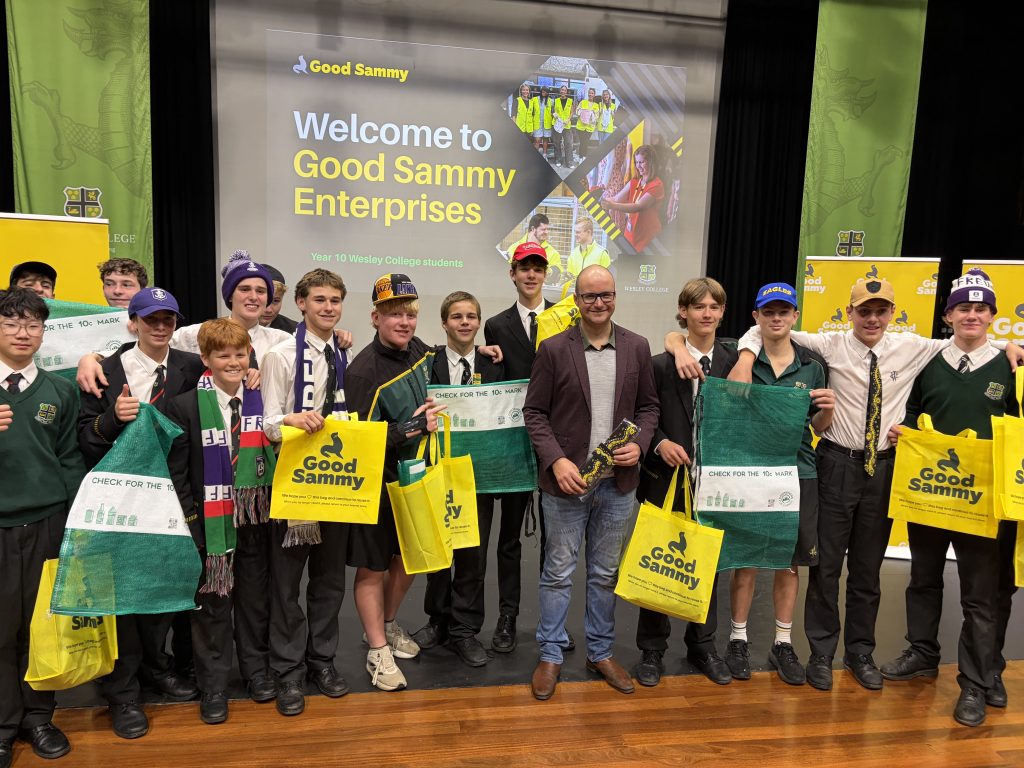
A kerbside collection trial was conducted across two council areas using: yellow bags for quality, wearable items; and blue bags for unwearable clothing. The trial received a strong community uptake, with participating households presenting an average of 2.5kg of poor‑condition clothing and linen per household. Encouragingly, households donated twice as much in good‑quality item volumes.
Good Sammy also assessed donations received at its stores and community donation points. Almost 80% of all donations received were wearable meaning they could be sold locally, or through international reuse markets. The study also found that 21% of clothing donations were unwearable consisting of:
- 14% recyclable textiles (e.g. stained items, unwearable clothing, socks, underwear and workwear)
- 5% items that could be washed or repaired
- 1% suitable for rag
- 1% sent to landfill (e.g. heavily worn or damaged bras or socks)
A focused review of workwear and uniforms revealed that 3% of donations carried branding or logos from businesses, clubs or schools. These items are generally unsuitable for local resale.
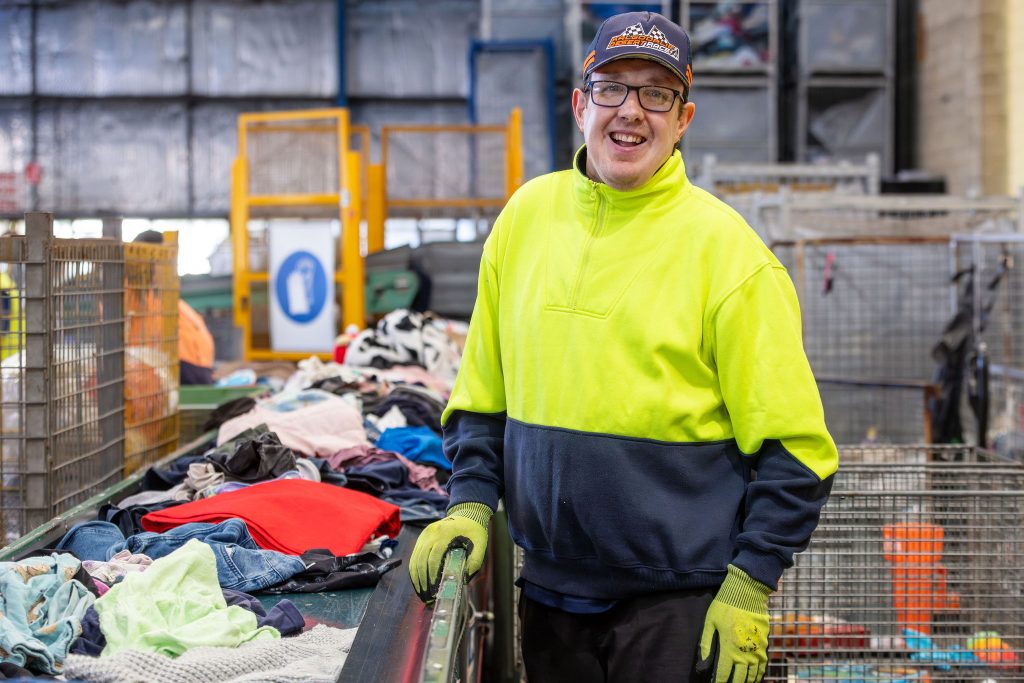
Across the project, Good Sammy sorted nearly 11 tonnes of donations, representing more than 50,000 individual items. Over 5 tonnes underwent multiple detailed sorting rounds to analyse the characteristics of unwearable clothing.
Further insights, including breakdowns by fibre type, colour and garment category are available in the full report.